
collagen supplements
tl;dr yes they are good for your skin

Someone all the way from f-ing Germany sent a DM with a question. Which is crazy.
I totally forgot Germany was a thing.
BEHOLD:
If you're keen to take a request, would love to get your deep dive into collagen supplements! Which sub-types needed? Is it stupid to put it in coffee? Do I really need zinc, copper, vit. C in my supplement? But why is it that if the supplement has these things, it doesn't have sub-type X? ...Are we just throwing money away?
Yes yes. Really good question(s).
For those without a German friend to remind you, skincare has moved beyond the topical into the micro-molecular and nutritional. Good news, I’m covering it. No need to thank me if it becomes the topic of conversation at the next gathering.
TL:DR: While effects are modest and not universal, the clinical literature supports collagen supplements improve skin with regular use.
Why are we talking about this
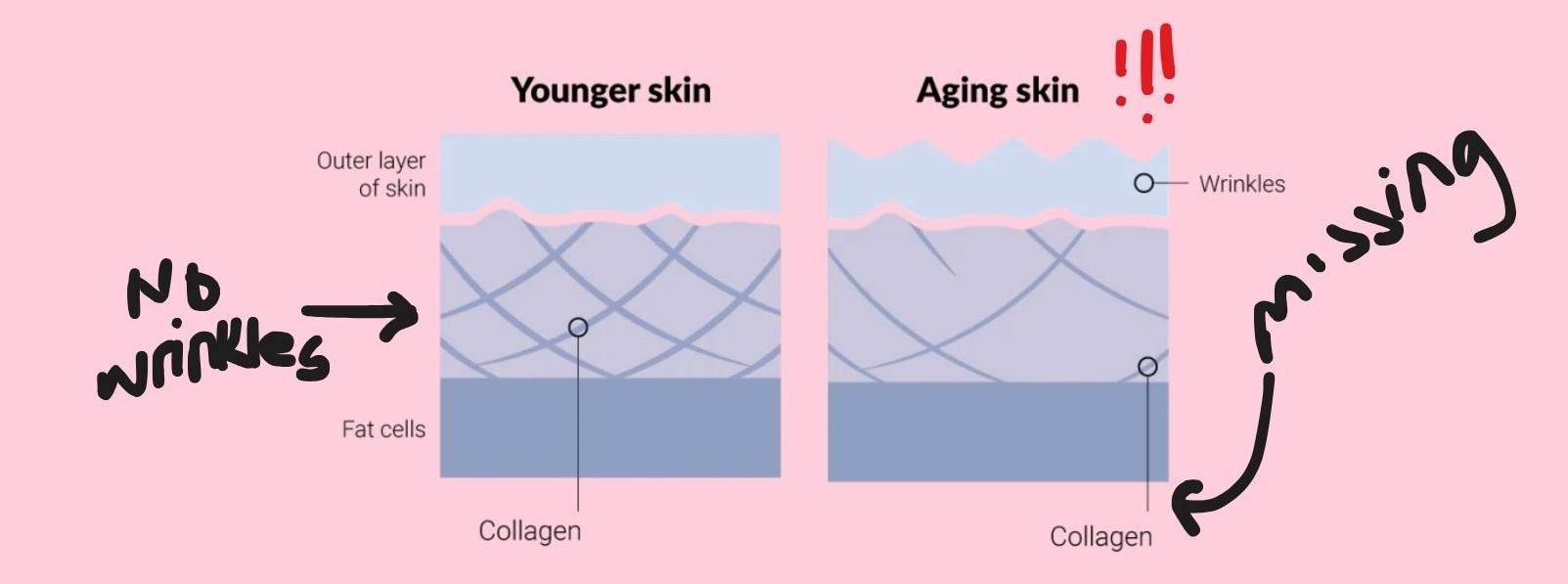
In terms of collagen supplementation, the scientific rationale is aging and injury (from like the sun, my frozen water melon vape, etc.) reduce collagen synthesis. The decrease in collagen alters the matrix composition.
What is this matrix?
No worries…Follow me.
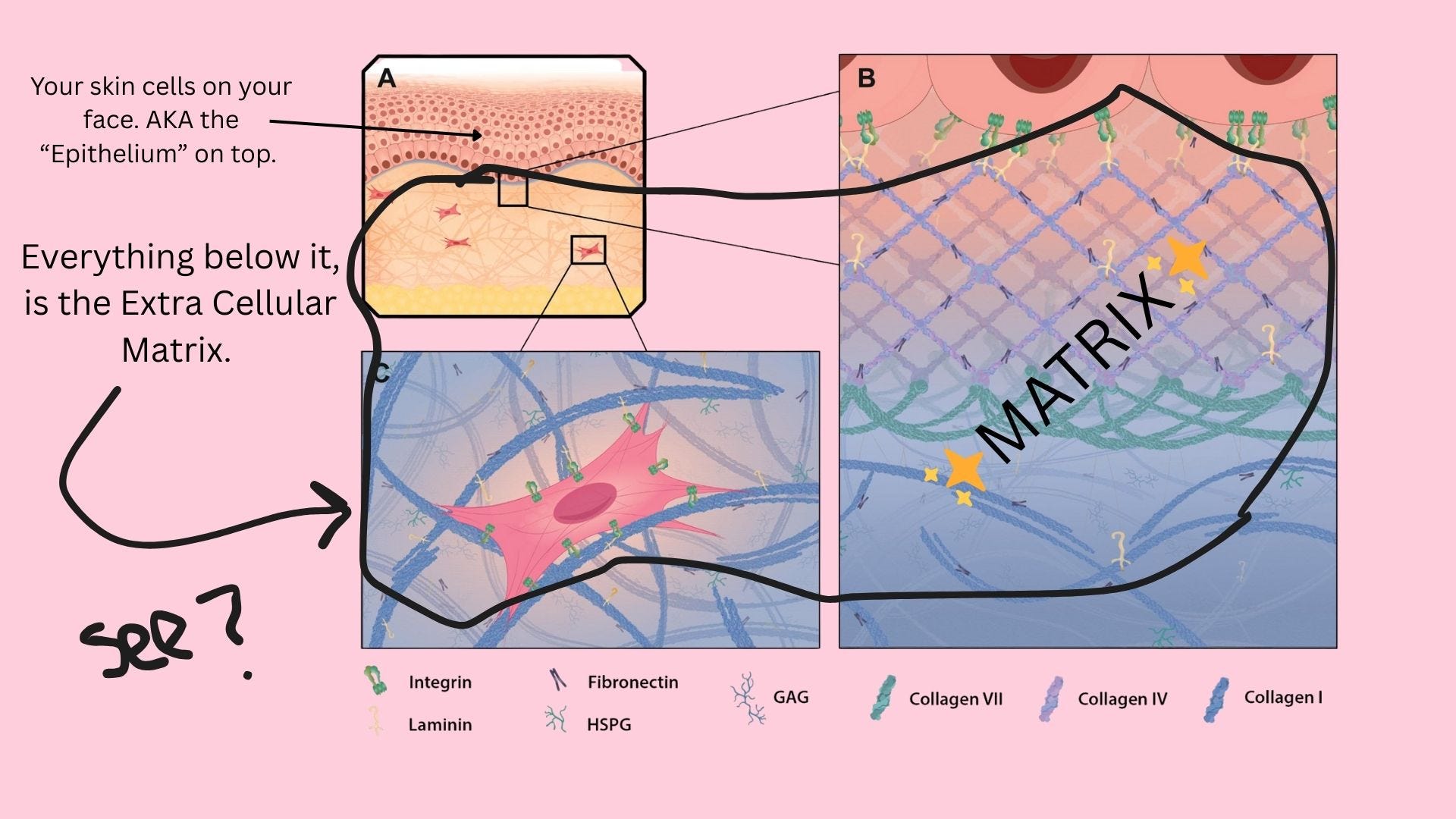
The extracellular matrix (ECM) is the network of proteins, glycoproteins, and polysaccharides that supports the cells of the dermis (and, to a lesser degree the epidermis, but whatever). It provides structural integrity, mechanical resilience, and biochemical signaling.
Also keeps us attractive.
• Firmness & lift → collagen
• Elasticity → elastin
• Hydration & plumpness → hyaluronic acid/GAGs
• Smoothness & even tone → basement membrane
That’s why anti-aging and skin rejuvenation treatments (retinoids, lasers, microneedling, fillers, red light, etc.) all work by stimulating or replacing ECM components.
I know. Did the lightbulb just go off?
You’re welcome.
Just as an FYI: Women are more affected by the loss of collagen compared to men. Cus fucking menopause. The estrogen deficiency accelerates the decline in skin collagen content.
What’s collagen? omfg there are sub-types.
Collagen is the most abundant structural protein in our body. Its in everything: skin, bone, cartilage, tendons, connective tissue. You name it. But that’s all you need to know.
For my German friend: It consists of a triple-helical structure built from repeating Gly-X-Y amino acid sequences, where X and Y are often proline and hydroxyproline, conferring tensile strength and stability to tissues.
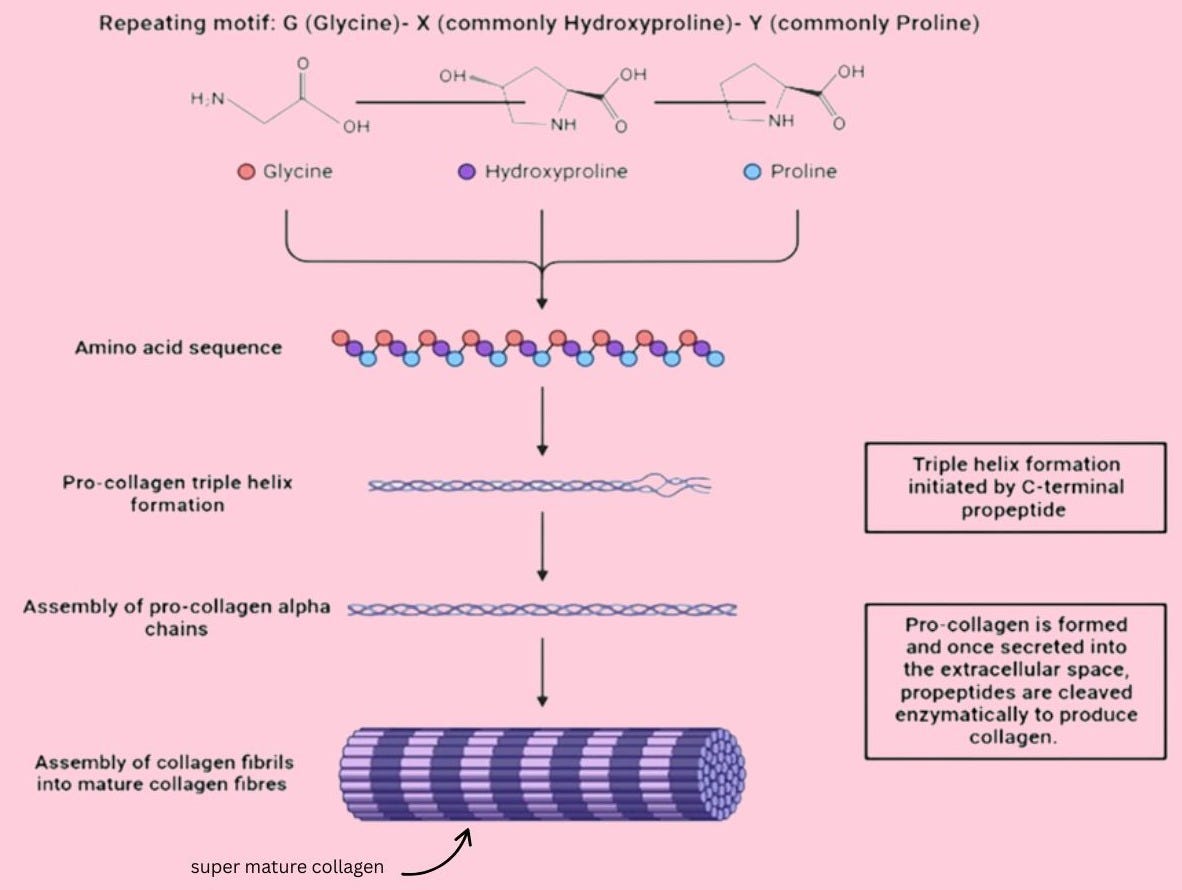
There are at least 28 collagen subtypes, but Type I, Type II, and Type III collagen are the only ones I learned about in medical school. And Type I collagen is the only one relevant in this conversation.
Type I is in the matrix. we just talked about the matrix.
In the context of oral supplementation
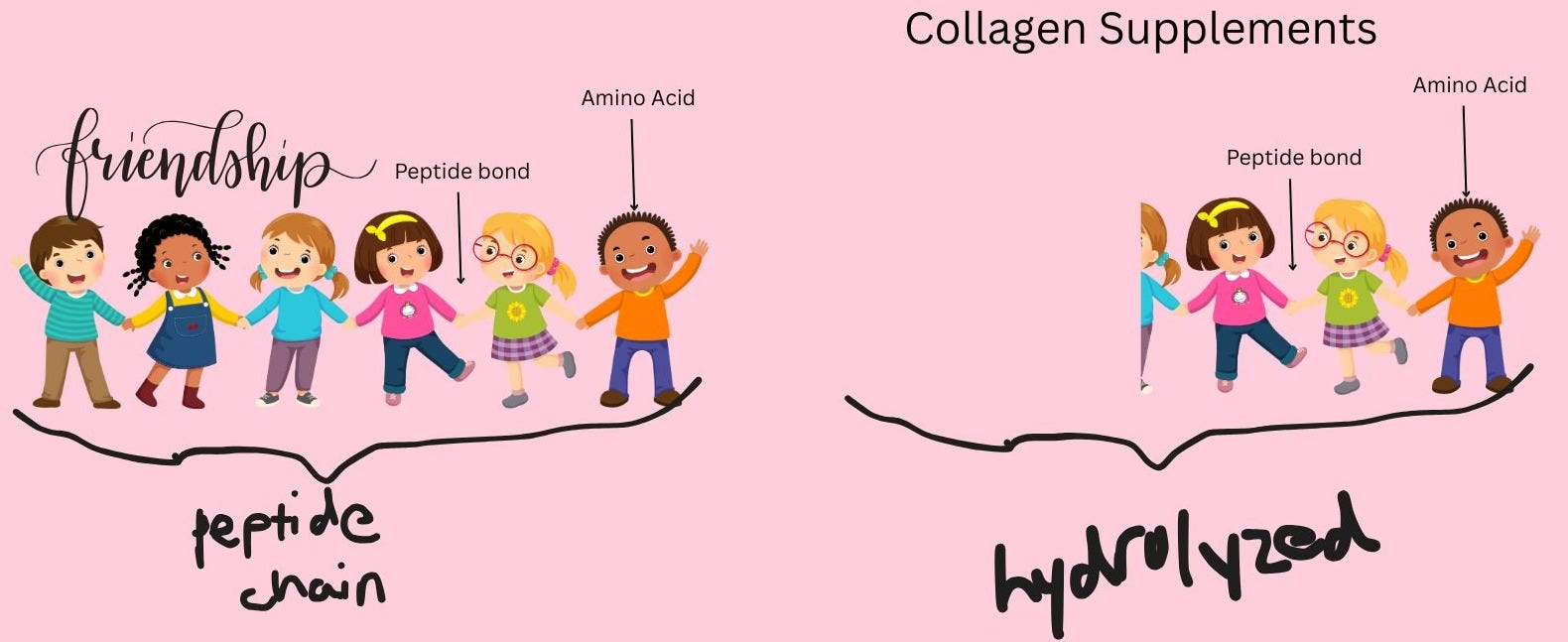
Oral supplementation typically uses hydrolyzed collagen peptides.
Okay im so sorry. Like actually, so sorry. But theres more science:
A peptide is a short chain of amino acids linked by “peptide” bonds, basically 2–50 amino acids holding hands.
In the context of oral collagen supplementation and beauty, hydrolyzed collagen peptides are fragments of collagen protein produced by enzymatic hydrolysis, resulting in low-molecular-weight compounds that are efficiently absorbed in the GI tract.
The collagen peptides contain bioactive sequences (e.g., Gly-Pro, Pro-Hyp). After you eat them, they stimulate dermal fibroblast activity —> upregulate type I collagen synthesis.
What’s actually useful:
The latest high-quality randomized controlled trials and meta-analyses demonstrate that oral supplementation with hydrolyzed Type I collagen is the most effective and best-studied approach for beauty-related outcomes, specifically improving skin hydration, elasticity, and reducing wrinkles.
Type I collagen, typically derived from bovine, porcine, or marine sources, consistently shows benefit in these domains, with daily doses ranging from 2.5 to 10 g over 8–16 weeks.
The source (bovine, porcine, marine) and subtype composition MIGHT influence efficacy, but meta-analyses show you can use any hydrolyzed Type I collagen from any animal. It doesn’t matter.
Blended collagen products (Type I + Type II or other combinations) have NOT demonstrated superior efficacy over pure Type I collagen for skin beauty endpoints. Subgroup analyses in meta-analyses indicate that the source and subtype of hydrolyzed collagen do not significantly alter the magnitude of effect for skin hydration or elasticity.
Collagen peptides enriched with specific dipeptides (e.g., Gly-Pro, Pro-Hyp, X-Hyp-Gly) may offer enhanced absorption and modestly greater improvements in skin elasticity, but these effects are incremental and not subtype-dependent.
I don’t know if I have the energy to get into this…
Can I Put It In Coffee?
Yes.
Does NOT significantly impair the bioavailability of collagen peptides. While polyphenols in coffee can interact with proteins, recent human pharmacokinetic data (fun!) show that absorption of bioactive peptides from hydrolyzed collagen is similar whether dissolved in water or coffee.
YAY!
Do I really need zinc, copper, vit. C in my supplement?
I mean you don’t NEEEED it but, yeah it works better with Vit. C
Vitamin C acts as a cofactor for prolyl and lysyl hydroxylase enzymes, which are required for collagen maturation and cross-linking, and clinical trials show enhanced improvements in skin density, texture, and wrinkle severity when vitamin C is combined with hydrolyzed collagen.
Fun fact! Thats why pirates got scurvy.
No, no copper needed.
I’m a little fuzzy on adding zinc, might as well throw that if you can find it…
In summary…
So…Are We Just Throwing Money Away?
No. But also…kind of yes, depending on expectations.
Collagen supplements aren’t magic fairy dust that turn you into a porcelain doll. What they are is one of the few ingestibles in beauty that actually has reproducible human data behind it. If you’re consistent, use hydrolyzed Type I collagen peptides, and give it 8–12 weeks, you’re likely to see modest but real improvements in skin hydration and elasticity.
Add vitamin C if you can. Skip the copper. Toss in zinc cus why not. Coffee is fine.
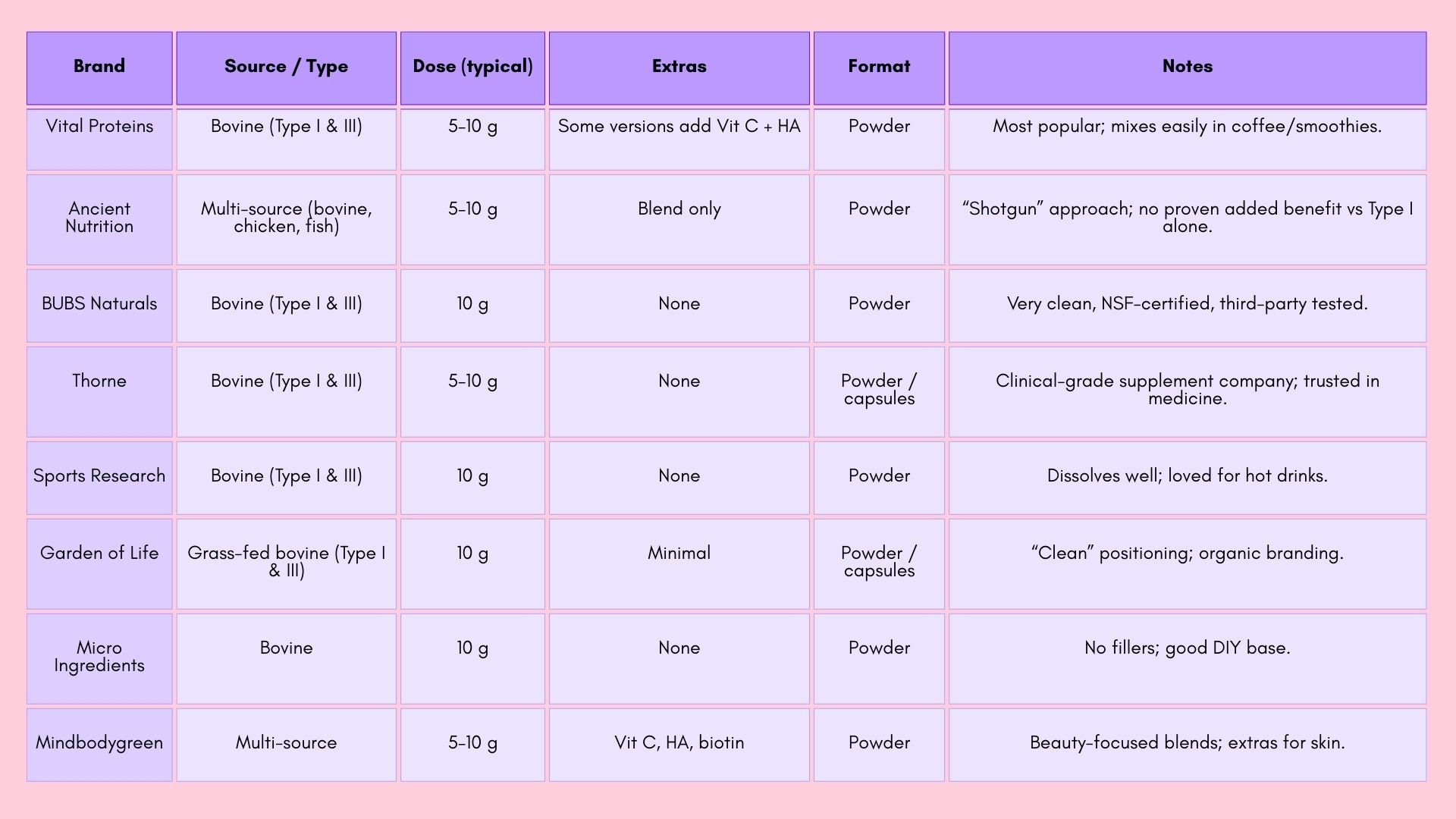
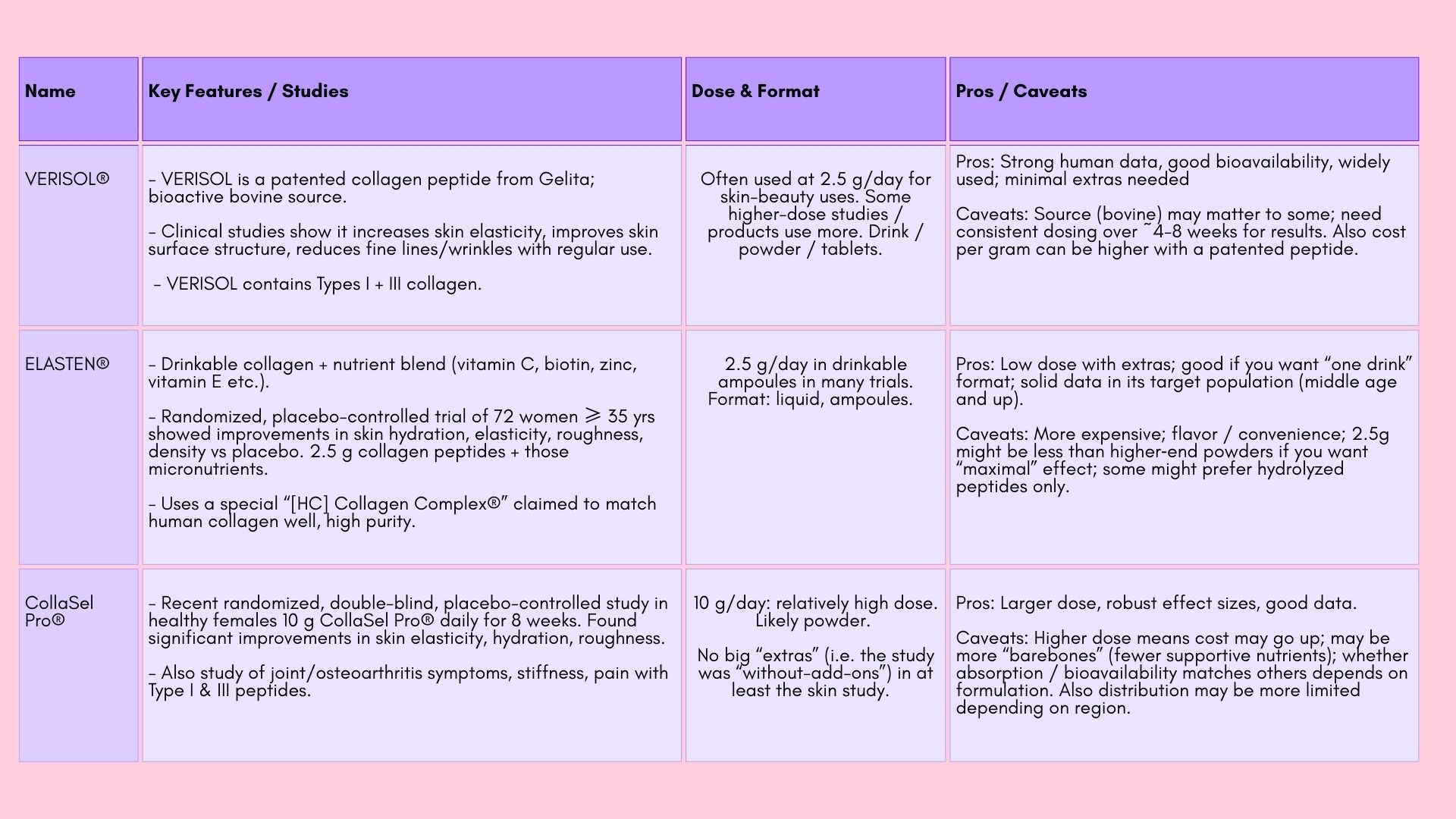
Some options
LMK if you found anything better 2 am on PubMed. We’ve got:
Mainstream = everyday products (coffee-friendly powders, drugstore gummies, clean labels).
Patented/Clinical = heavy hitters (backed by RCTs, patented peptides, targeted skin outcomes).
Cute Brands
Patented/Clinical
I dont like any of those
fine.
What to look for in a collagen supplement:
Source & Type of Collagen: Bovine (cow), marine (fish), porcine, chicken, or multi-collagen blends. Different types (I, II, III, etc.) target different tissues (skin, joints, cartilage). For our face we want Type I, anything more is a bonus. Go for Type III if you want a second one in there…
Hydrolyzed / Collagen Peptides: These are broken down into smaller peptides so are more easily absorbed.
Third-Party Testing / Certifications: NSF, USP, GMP, etc., to ensure quality, purity, and that what the label says is really in the product.
Added Ingredients (optional, depending on your goals): Vitamin C (helps with collagen synthesis), hyaluronic acid, sometimes other antioxidants or minerals.
Transparency of Label: Clear info on collagen amount per serving, source, other ingredients; minimal unnecessary fillers, sugars, coloring.
Form & Convenience: Powder vs. capsule vs. gummy vs. drink. Personal preference and how easy to integrate into your routine matters.
Ta-da!
Excellent read! Hello from the UK 🇬🇧🫶